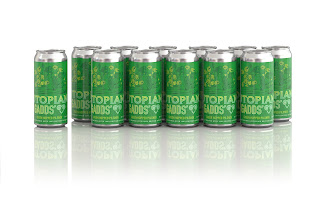
Thanks to Pete Brissenden for alerting me to the Taste of Kent Awards current top ten nominations. You may notice that Dark Conspiracy is (as of this day) in there. You may also note that competition rules state that Kent's best beer should be "beer made from hops predominantly grown in Kent at a brewery based in Kent". Whilst I'm extremely grateful for all votes received for GADDS' beers, I feel that I must point out that DC is brewed with hops grown beyond these shores and that these transatlantic lupulin badboys are responsible for a significant portion of the beer's flavour and character. From that perspective it is certain that this beer is totally unqualified to be nominated as 'Kent's Best Beer'. To that end I've alerted the organisers and asked them to remove Dark Conspiracy from the list. But many thanks for those votes regardless, hope you don't feel you've wasted yours.
As regular readers will appreciate, hops are used for flavour and bitterness in beer. Now it is perfectly possible to use hops predominantly grown in Kent and produce a beer whose flavour is essentially, and fundamentally, non-Kentish, by timing the hop additions cleverly. For example - brew an IPA, bitter it with East Kent Goldings (say 60% of the total hops) and flavour with an American citrus variety. This way you end up with a beer that would qualify under the present rules yet the flavour is Stateside, rather than Garden of England. Perhaps the rules ought to state 'brewed with hops grown exclusively in Kent'.
However, you know by now that all of GADDS' regular beers are brewed exclusively with Kent grown hops so vote in confidence for either #3, #5, #7, Seasider or Dogbolter. Better still, rather than split the vote, simply choose GADDS' Number 3 Premium Kent Pale Ale - the true taste of East Kent.
Thanks.
Tuesday, 10 November 2009
Monday, 9 November 2009
Tea with the Competition.
James Sandy, proprietor of the new Wantsum Brewery, dropped in to say hello today. It didn't take us long to agree on the basics:

Yeh, I know the GADDS' apostrophy is in the wrong place: the mug is a 'second', one of only a few dozen and hopefully a collector's item now.

Yeh, I know the GADDS' apostrophy is in the wrong place: the mug is a 'second', one of only a few dozen and hopefully a collector's item now.
Friday, 6 November 2009
Basic brewing - 1.1
Before we go any further let's revise.
We consider a brewery to be made up of three parts:
1. Brewhouse - the place we mix malted barley with hot water, steep, strain and boil the resultant extract with hops prior to cooling and sending to the fermentation vessels (see below). This is a batch process and we're able to 'put a brew through' in 8 hours.
2. Fermentation Room - where we keep the fermenting vessels. These we fill with sweet boiled wort from the brewhouse (see above), adding yeast to convert the cereal sugars into alcohol over a period of 7 days or so. They (the fermenters) may match the batch size ('brew length') of the brewhouse, be smaller (allowing two or more to be filled from one brew), or indeed be larger (taking up to three consecutive brews to fill). Once done in here we send the 'green' beer to casks or tanks for maturation (see below).
3. Maturation and cold storage - a cold room we call a cellar, though it isn't. It's on the ground floor. Beer arrives here in casks or tanks from primary fermentation (see above) and stays here from anywhere from 2 days to 2 years depending on its nature. Then Gray the Dray loads and delivers it, mostly.
We've got to the stage where:
Phew, enough for now class. Next time we'll talk about phasing and I might get some photos out.
We consider a brewery to be made up of three parts:
1. Brewhouse - the place we mix malted barley with hot water, steep, strain and boil the resultant extract with hops prior to cooling and sending to the fermentation vessels (see below). This is a batch process and we're able to 'put a brew through' in 8 hours.
2. Fermentation Room - where we keep the fermenting vessels. These we fill with sweet boiled wort from the brewhouse (see above), adding yeast to convert the cereal sugars into alcohol over a period of 7 days or so. They (the fermenters) may match the batch size ('brew length') of the brewhouse, be smaller (allowing two or more to be filled from one brew), or indeed be larger (taking up to three consecutive brews to fill). Once done in here we send the 'green' beer to casks or tanks for maturation (see below).
3. Maturation and cold storage - a cold room we call a cellar, though it isn't. It's on the ground floor. Beer arrives here in casks or tanks from primary fermentation (see above) and stays here from anywhere from 2 days to 2 years depending on its nature. Then Gray the Dray loads and delivers it, mostly.
We've got to the stage where:
- capacity at stage 2 is inadequate.
- capacity at stage 3 will be inadequate once the Kent spring springs in. And
- it also makes a lot of sense to increase capacity at stage 1 too (thanks Hang 'Em).
Phew, enough for now class. Next time we'll talk about phasing and I might get some photos out.
Thursday, 5 November 2009
All change!
So, to recap: we've been here at Hornet Close with our little brewery for 3 years, slowly but surely building up our customer base, increasing sales and adding capacity. There's now three of us full time and four part. We all get paid and no one has to work like a horse (anymore). Even the numbers add up properly, at the end of the month.
Easy street here we come? No way. I'm ripping the whole thing out and starting again, bigger (three times) and better (immeasurably). Why? It's not as if we did a poor job in the fist place, quite the opposite, by luck more than judgement. But, and inexplicably I'm afraid, I know there's no plateau upon which to rest, it's just a straight incline. Or a decline. I'm scared of the former but not half as frightened as I am of the latter.
So look forward to a blow by blow account over the coming months of how to decommision two breweries and recommision them both armed with only a wing (secularity precludes the usual prayer), an extremely tight budget and total failure-phobia. Ought to be interesting.
Easy street here we come? No way. I'm ripping the whole thing out and starting again, bigger (three times) and better (immeasurably). Why? It's not as if we did a poor job in the fist place, quite the opposite, by luck more than judgement. But, and inexplicably I'm afraid, I know there's no plateau upon which to rest, it's just a straight incline. Or a decline. I'm scared of the former but not half as frightened as I am of the latter.
So look forward to a blow by blow account over the coming months of how to decommision two breweries and recommision them both armed with only a wing (secularity precludes the usual prayer), an extremely tight budget and total failure-phobia. Ought to be interesting.
Monday, 2 November 2009
Local secrets - Castres-Gironde
Neighbours gave us a plastic litre bottle of fresh wine, advising that it drank particularly well with roast chestnuts. Following a forage in the forest and a little work in the kitchen we duly cracked the unlabelled bottle and poured out glasses of faintly fizzy, cloudy white wine. Slightly sweet, though clean as a whistle, this stuff had been bottled from the primary fermenters (before full attenuation and clarification) and sold by word of mouth at the chateaux for a couple of euros a litre, strictly to the locals, in an under-the-counter style. And cracking stuff it was too, the whole experience thoroughly local and singular.
We sell our beer fresh from the cellar here in a similar fashion and we've a growing bunch of regulars turning up with containers various as suits their needs. This kind of sensible 'producer direct to customer' business is growing again, thanks to a widening realisation that it's more rewarding than buying soulless ale from a faceless middleman. It doesn't suit everyone, and it won't work on a massive scale, but for the few that care this service will always be valued.
Saturday, 31 October 2009
Notes on terroir - Graves
The grandfather of the wine regions of Bordeaux is Graves, on the left bank of the Garonne as it heads north west to join the Dordogne. The land is characterised by intensely gravelly soil - glacial deposits - and though this engenders fine drainage properties, all those stones must be a nightmare for farmers and their machinery. However, if it's grapes you're growing this otherwise troublesome terrain is a positive blessing for, it is said, not only is the land free draining, but the pale pebbles reflect light and heat up under the fruit, aiding ripening.
I'll take this on trust. Sante!
Tuesday, 27 October 2009
Notes on terroir - Sauternes
Rising from a spring in the Gascony forest, the Ciron flows north east to join the Garonne a kilometer up river from Barsac in the Sauternais region of Graves. And though it reaches little more than a stream in size its impact upon wine making is great. In stark contrast to this small, fast flowing, cold body of water, the Garrone is a lumbering, sluggish and relatively warm beast that has travelled from the Spanish Pyrenees. Where the two meet, mist is common through the night, the warm late summer sun burning it off in the morning. The humid conditions are conducive to the formation and proliferation of fungal rot whilst the hot and dry daytime provides excellent grape ripening. The result is a slow raisening of the fruit, reducing the water content and thus concentrating the sugars whilst retaining acidity important for flavour balance.
The sweet dessert wines of the Sauternes are true classics and I recommend a suspension of prejudice whilst you sample them, late at night, with a bit of bread and some (Quorn) Fois Gras.
Don't worry, I'm only here for a week. We'll be back on the beer by Hallowe'en.
The sweet dessert wines of the Sauternes are true classics and I recommend a suspension of prejudice whilst you sample them, late at night, with a bit of bread and some (Quorn) Fois Gras.
Don't worry, I'm only here for a week. We'll be back on the beer by Hallowe'en.
Subscribe to:
Posts (Atom)